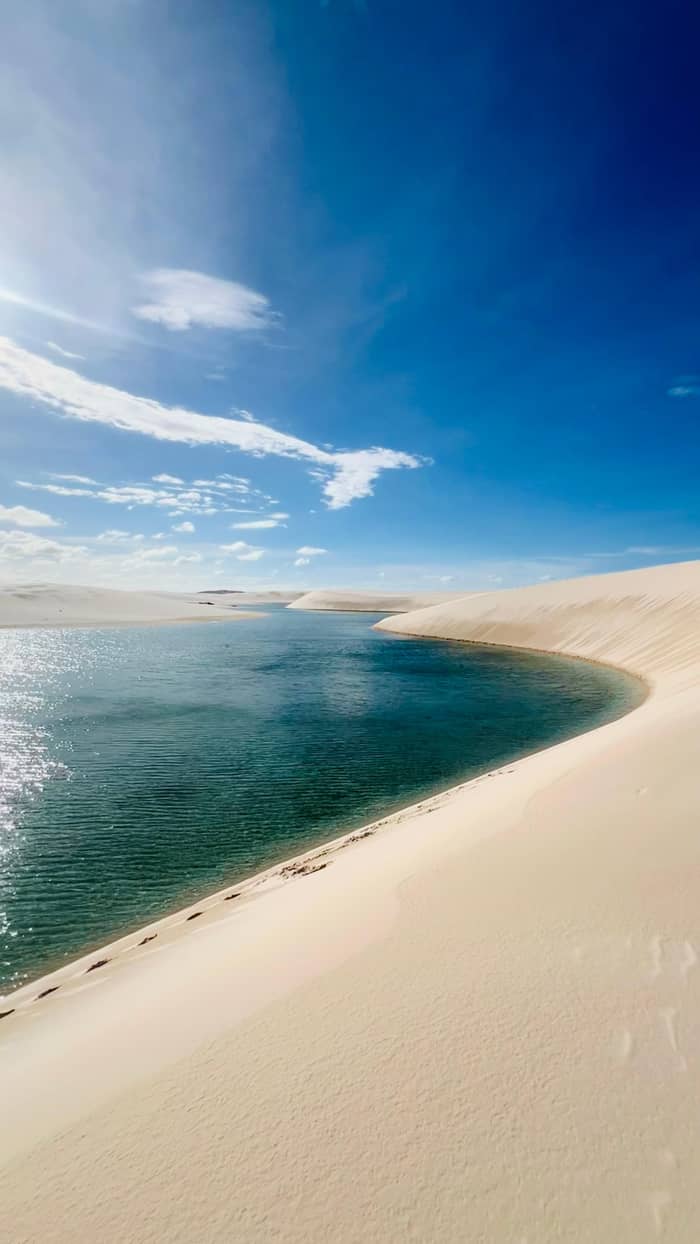
Closest
Lagoa Azul
Barreirinhas side
- ReachShort walk from the trucks
- FeelBusy, classic
- TripMorning half day
Guides
Language
Currency
Find open datesfrom $90 · cancel for freeExplore the stops
The quick version
The best-known Lencois Maranhenses lagoons are Lagoa Azul, the easiest to reach, and Lagoa Bonita, with its high view; Lagoa da Esperanca and Lagoa da Gaivota hold water in the dry months.
Lagoon facts
See 17 route stops
Start by picking a route; tap a pin or stop for its note and Google Maps.
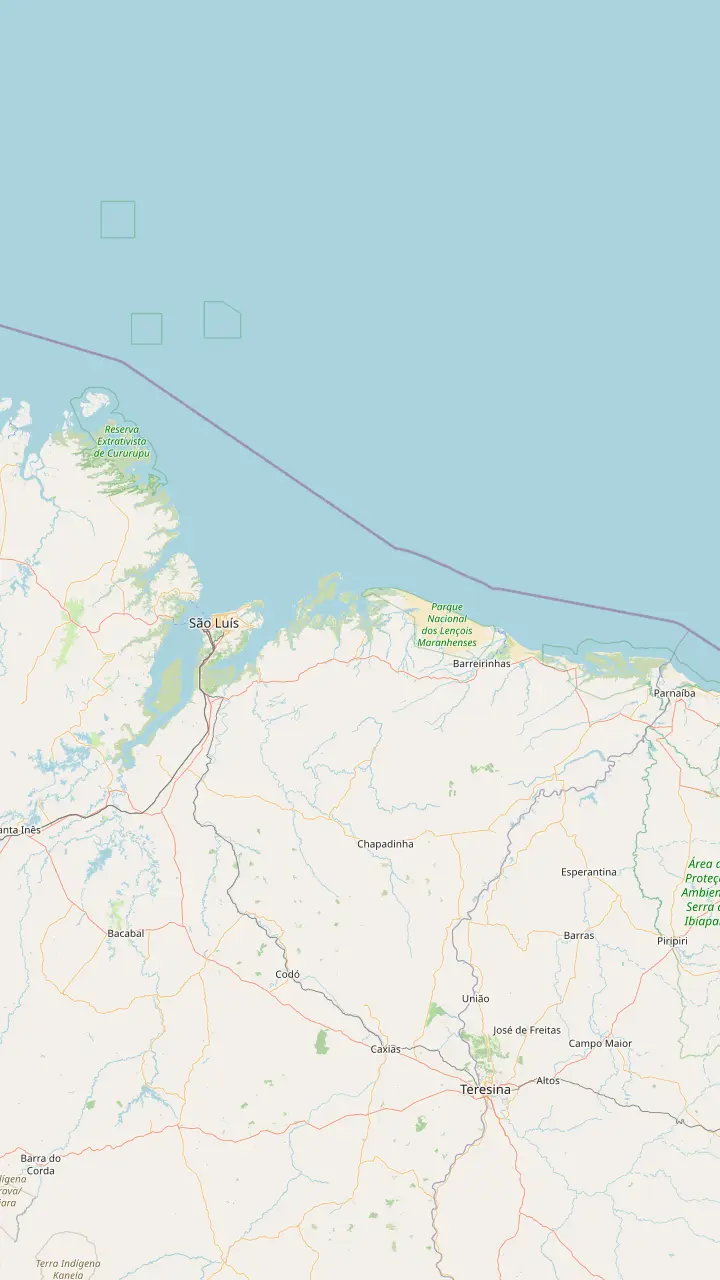
The nearest commercial airport to the park; the road on to it takes 3:30 hours on average, depending on the gateway.
Google MapsThe main base for the park, on the Preguicas river; daily buses from Sao Luis, and the Lagoa Azul and Lagoa Bonita trips start here.
Google MapsThe western gateway: paved road since 2017, with lagoons close enough to reach on foot, by 4x4 or by boat.
Google MapsA fishing village between the dunes, the beach and the river, and now a kitesurfing hub partly inside the park.
Google Maps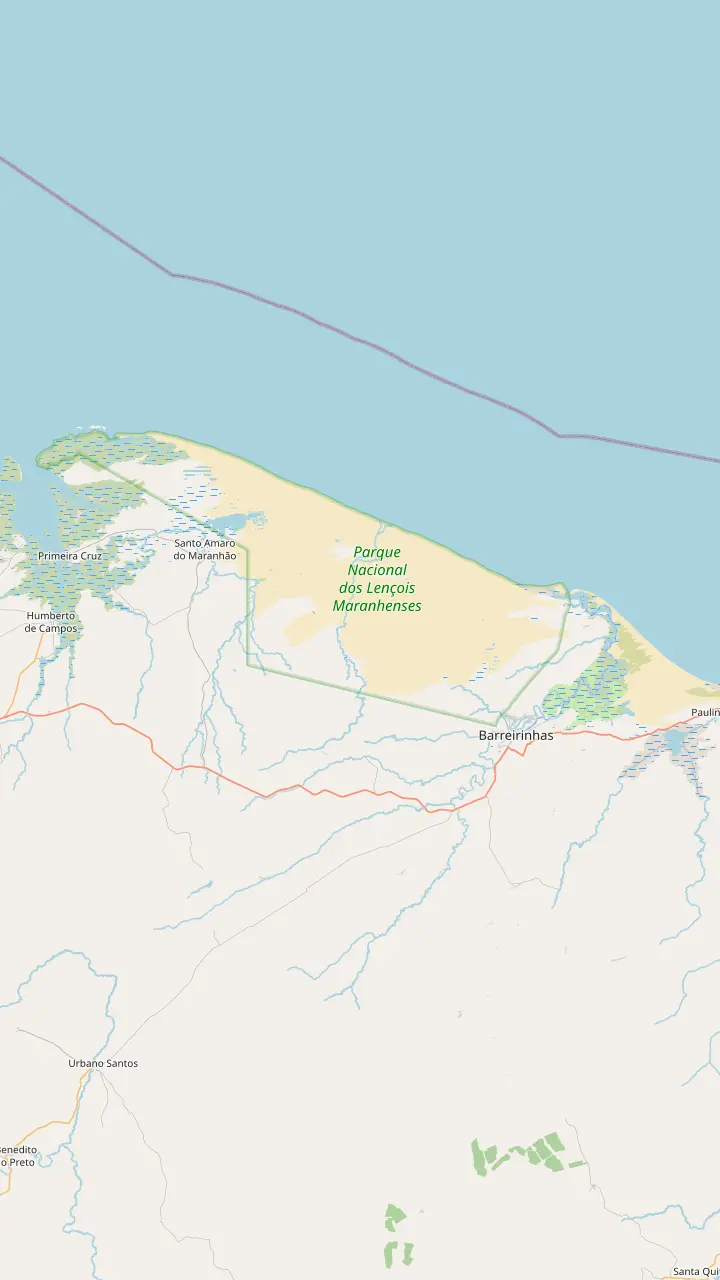
The main base for the park, on the Preguicas river; daily buses from Sao Luis, and the Lagoa Azul and Lagoa Bonita trips start here.
Google MapsThe most visited lagoon of the park, and the closest to where the 4x4 trucks stop.
Google MapsSet on one of the highest points of the park, with a panoramic view over the dune field.
Google MapsThe lagoon here can turn reddish, tinted by the buriti palm groves around it.
Google MapsThe Rio Negro forms it at the edge of the moving dunes; its water is permanent and up to 12 m deep.
Google MapsThe first night stop when the crossing starts in Atins, after a direct walk of 6 hours.
Google MapsAn oasis of green restinga in the dunes, home to fishing families and a night stop on the crossing.
Google MapsHolds a good water level through the dry months, when other lagoons on the Santo Amaro side empty.
Google MapsReached by land or along the Rio Grande, with dunes lining the riverbank.
Google MapsBig blue and green lagoons near Santo Amaro, and among the busiest stops in the park.
Google MapsThe largest lagoon in the park by the state's account, and one that never dries out.
Google MapsThe western gateway: paved road since 2017, with lagoons close enough to reach on foot, by 4x4 or by boat.
Google Maps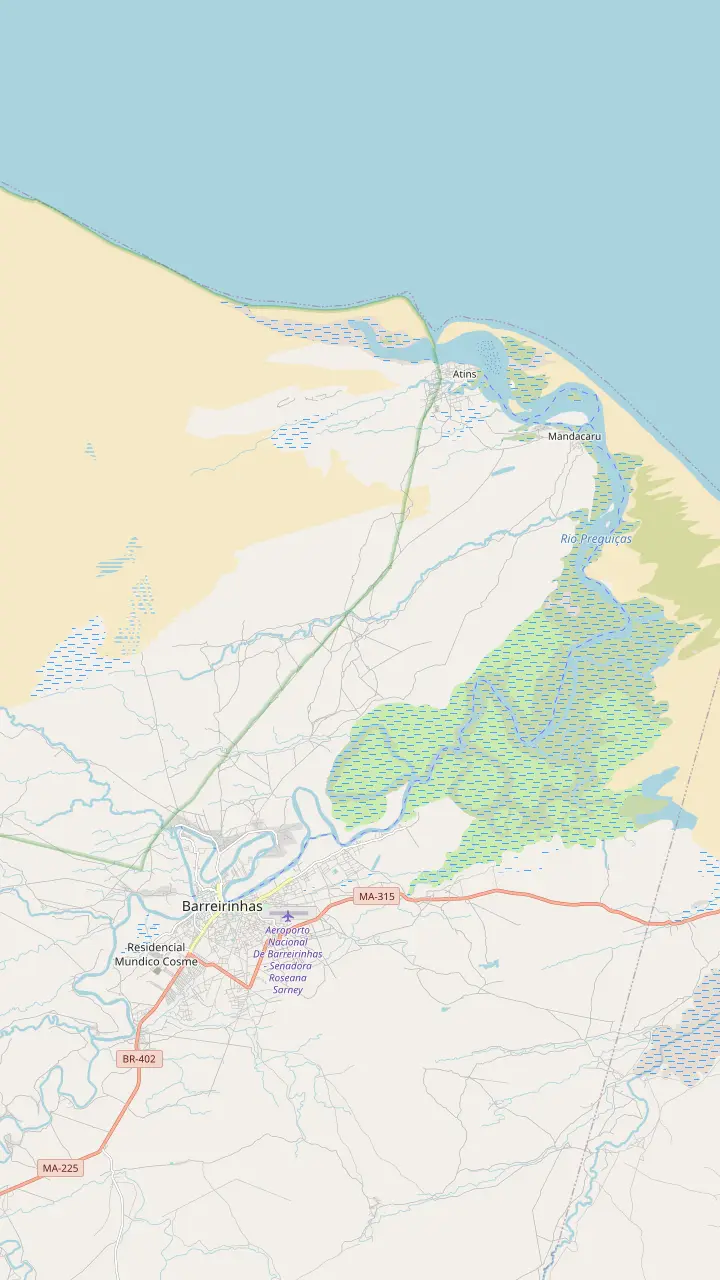
The main base for the park, on the Preguicas river; daily buses from Sao Luis, and the Lagoa Azul and Lagoa Bonita trips start here.
Google MapsThe most visited lagoon of the park, and the closest to where the 4x4 trucks stop.
Google MapsHome of the Lagoa do Mario, which restinga encircles, unlike most lagoons here; carnivorous plants grow nearby.
Google MapsA fishing village between the dunes, the beach and the river, and now a kitesurfing hub partly inside the park.
Google MapsMandacaru's 54 m lighthouse, with a view over the dunes and the river mouth from the top.
Google MapsA beach on the far side of the Preguicas river, listed by the park among the region's other attractions.
Google MapsBase map © OpenStreetMap contributors
The Lencois Maranhenses lagoons are not one place but many, scattered across the dunes. Here is what each famous lagoon is like and which trip takes you there.
Editorial team, lencoismaranhensestour.quest · Updated November 11, 2026 · ~8 min read
Basics
The Lencois Maranhenses lagoons are basins of rainwater caught in the hollows between the dunes, as the EU's Copernicus programme describes them.6 They are fresh, clear and mostly shallow, and their number and size change with every rainy season. The tour operator's notes put the full spell at about 4 months in a normal year. Some of them return in the same place each year; others shift with the sand.
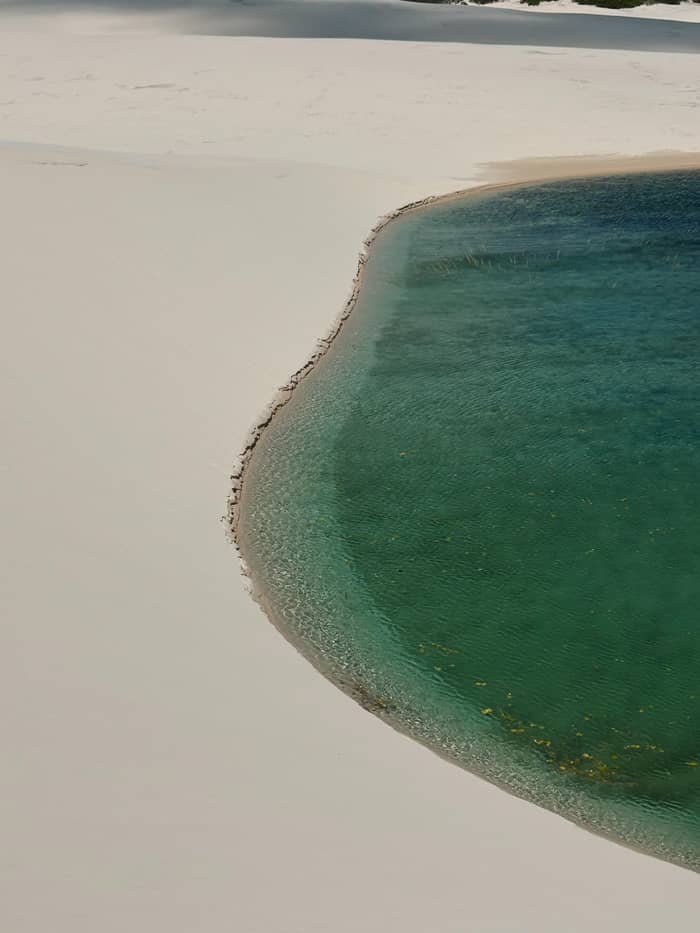
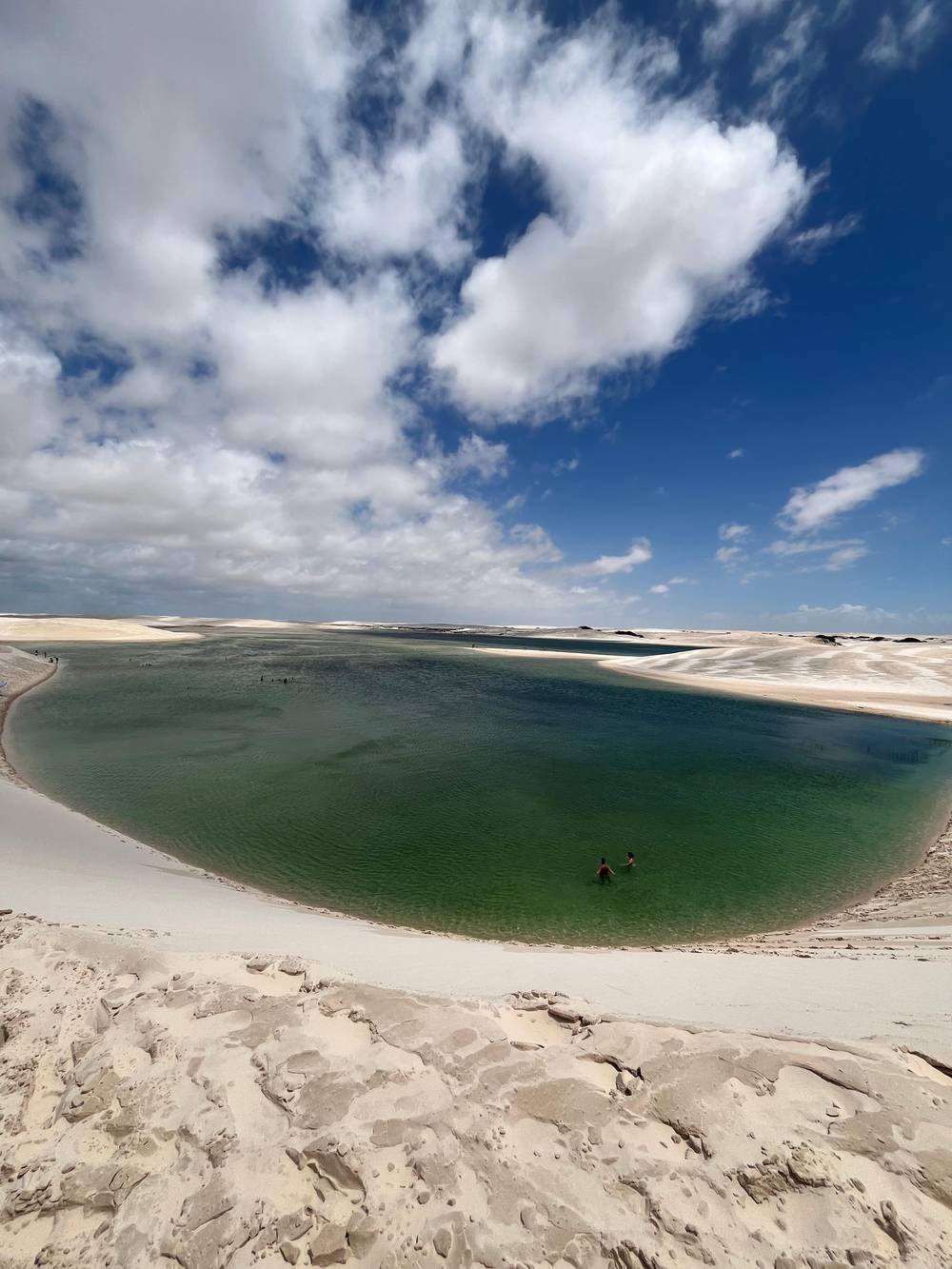
Their colours have a simple physical explanation. NASA's Earth Observatory notes that shallow lagoons look light blue from above, often turquoise or aquamarine, because sunlight bounces back off the white sand below.7 Deeper lagoons look darker, since deep water absorbs more of the red, yellow and green light and sends back mostly blue.8 Sediment, microscopic algae and dissolved organic matter give some of them greener or browner tones.9
That is why the same lagoon looks different at noon and at sunset, and why photos from the air show a patchwork of blues and greens. The Lencois Maranhenses blue lagoons you see in pictures are mostly the shallow ones, lit by midday sun over pale sand. On the ground the water feels warm near the edges and cooler in the middle, and it is clear enough to see the rippled sand on the bottom.
Lagoons compared
| Lagoon | Side | Reach it | What stands out |
|---|---|---|---|
| Lagoa Azul | Barreirinhas | Morning half day by 4x4 | Most visited, easiest |
| Lagoa Bonita | Barreirinhas | 4x4 and a wooden staircase | View from a high point |
| Lagoa da Esperanca | Between the gateways | Long drive from Barreirinhas | Permanent, up to 12 m deep |
| Buriti Amarelo | Barreirinhas | With a guide | Reddish water |
| Lagoa do Kite | Atins | From Atins | Kitesurfing |
| Lagoa da Gaivota | Santo Amaro | Near town | Largest, never dries |
| Lagoa do Junco | Santo Amaro | On foot or 4x4 | Water in the dry months |
| Betania | Santo Amaro | By land or river | Dunes on the riverbank |
From the state tourism office, ICMBio's pages and the park's public use plan.1,11,10,3,15,16,17,4,18,19
Lagoa Azul is the most visited lagoon in the park and the easiest to reach, being the closest to the spot where the 4x4 vehicles stop.1 ICMBio describes the trip as normally a morning half day, with a 4x4 trail and a stop to swim.11 The circuit takes in more than the lagoon that gives it its name: ICMBio lists lagoons that come and go with the rain, wind and moving dunes, among them Lagoa da Preguica, Lagoa da Esmeralda and Lagoa do Peixe.12
Look down as you swim. The state tourism office points out the plants growing on the floor of the lagoon and the small fish that survive the dry periods as eggs buried in the sand.13 It is one of the quiet surprises of the place: a whole small ecosystem that waits out half the year under the dunes and hatches again when the water comes back. Swim gently near the edges, where the young fish gather in the warm shallows.
Because it is close and famous, Lagoa Azul is also where you meet most other visitors. The park plan counts the area of Lagoa Azul and Lagoa Bonita as the busiest in the park for people and vehicles.14 A morning trip there runs 5 hours, from $51. Go early, walk a little beyond the first lagoon, and you will often find a quieter one just over the next ridge, with the same clear water and far fewer voices.
A day on both circuits
Morning
The tour collects you from your lodging.
Late morning
The lagoon closest to the 4x4 stop.1
Midday
A stop to eat and rest.
Afternoon
Up the staircase into the dunes.10
Sunset
The day ends with the sunset at Lagoa Bonita.
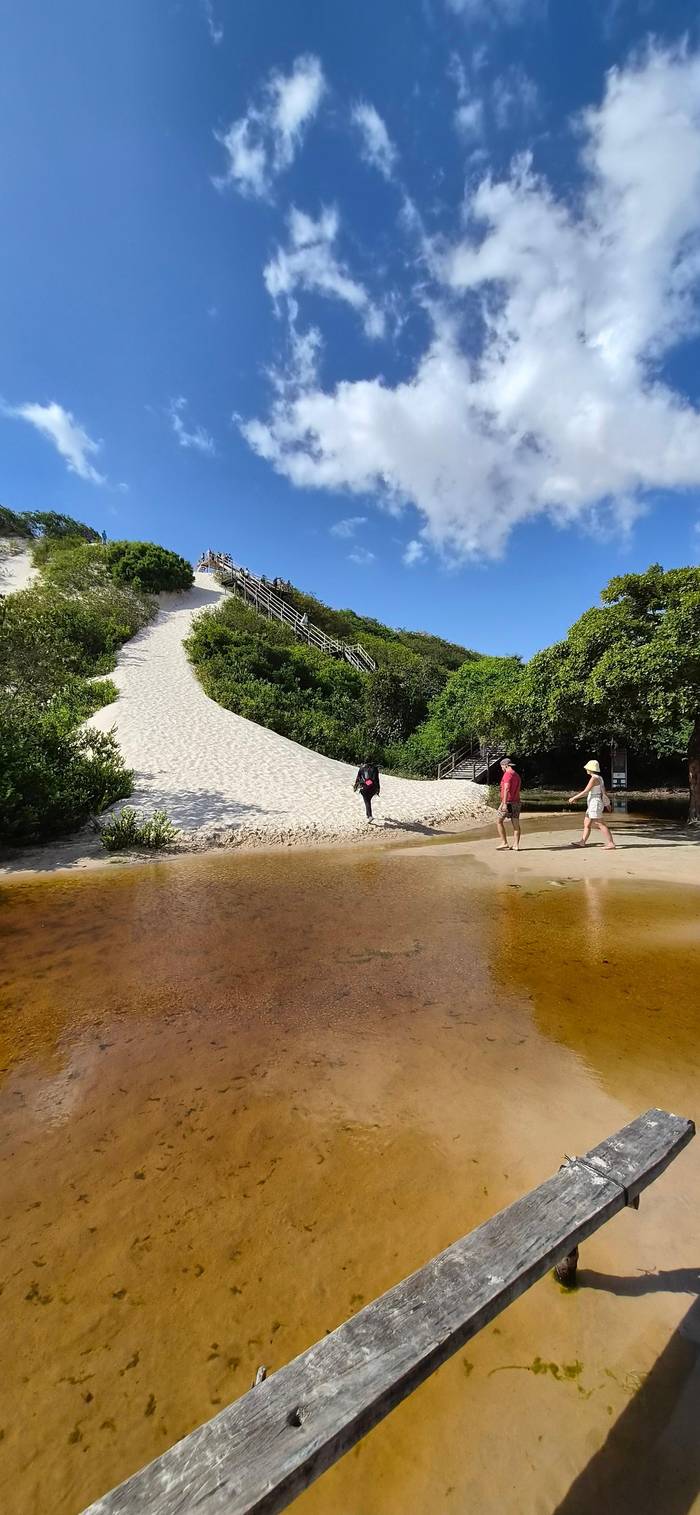
Lagoa Bonita is the other classic, and the one with the view. The park plan notes that it sits at one of the highest points of the park, giving a panoramic sense of how vast the dune field is.2 ICMBio describes the arrival: a 4x4 ride over sand roads and then a wooden staircase that leads up into the dunes.10 From the top, the white sand and its lagoons run to the horizon on one side and green cerrado covers the land behind.21
The drive out is longer than to Lagoa Azul, the state notes, and the bumpy off-road stretch is part of the price of the view.22 The circuit visits several lagoons besides the one that gives it its name, including Lagoa do Clone and Lagoa do Descanso.23 A half-day trip there takes 5 hours, with a ferry across the Preguicas river, an off-road vehicle over sandy tracks and the sunset in the dunes.
The full-day tour we sell finishes here, watching the sun drop behind the dunes. The management plan singles out the Azul, Bonita, Esperanca and Peixe lagoons for a higher degree of protection, which tells you how much these few basins carry.24 Walk in the footsteps of your group on the ridges, and leave the fragile edges alone. Take your photos from the top, then go down for a swim before the light starts to turn.
Which lagoons?
Start from the kind of day you have in mind.
If I want the famous lagoons in one day
Azul and Bonita
The combo day covers both regions.
If I want a big view
Lagoa Bonita
It sits on one of the highest points.2
If I am visiting in the dry months
Esperanca or Gaivota
If I want sea and lagoons together
The Atins side
Lagoons near the coast and the Lagoa do Kite.17
If I want to walk rather than ride
Santo Amaro
Lagoons near town on foot.20
The big names
Closest
Barreirinhas side
High view
Barreirinhas side
Never dries
Santo Amaro side
Deeper in the park, the Rio Negro meets the edge of the moving dunes and forms the Lagoa da Esperanca, ringed by thick restinga, with permanent water up to 12 m deep.3 In the dry months, the park plan says, no visitor should miss it.42 ICMBio notes that it lies on the border of Barreirinhas and Santo Amaro, more than 1 hour from Barreirinhas, so it is a trip of its own rather than an add-on.15
The Lagoa do Buriti Amarelo stands out for its colour. Close to groves of buriti palms, its water can turn reddish, which the state tourism office calls an interesting place to learn about the environment.16 Elsewhere, the park plan describes the Lagoa da Prata, also on one of the highest points of the park, as a place with few visitors where you may see birds and the pininga turtle.43
That turtle is worth knowing about. The park plan names the pininga, Trachemys adiutrix, among the threatened and endemic species of the park and calls it the park's symbol.44 Should one cross your path, keep your distance and let it go about its business. The quieter lagoons are where such moments happen, away from the crowds of the classic circuits. Ask your guide which of them still hold water in the week you visit.
Lagoon trips
Pick a trip and the number of travellers.
Compare 4 choices
Pick a trip and the number of travellers.
≈
View≈
View≈
View≈
ViewFrom-prices on GetYourGuide, shown at the ECB reference rate. Your exact price is confirmed during booking.
Around Atins the lagoons meet the sea. The park plan describes the Lagoa do Kite, which draws kitesurfers in the months of steady wind, and an area where visitors may see gulls, scarlet ibis and the pininga turtle.17 Along the Praia dos Lencois, a beach of about 20 km, tidal channels cut through outcrops of sandstone and old mangroves that the dunes once buried.45 It is a different face of the park from the inland basins.
When the lagoons drain toward the sea, the water carries sand away and uncovers those fossil mangroves, and small waterfalls form, mostly at the mouth of the Rio Negro in the rainy season.46 At Ponta do Mangue, the Lagoa do Mario is unusual for being ringed by restinga, and carnivorous plants grow nearby.37 These are places for an unhurried day rather than a quick swim, and they reward a guide who knows the tides.
Day trips from Barreirinhas cover this side too. One runs 8 hours by 4x4 to the lagoons, Atins and Canto do Atins, with guides in Portuguese, English and Spanish, from $81. If you sleep in Atins instead, you can walk to some lagoons at the edge of the village and join longer trips from there. Carry water and leave word at your pousada about your route, since the dunes behind the village all look alike.
Video
Wout of the World on YouTube · Your tap on play is what loads the video.
From above, shallower lagoons appear light blue, often taking on turquoise or aquamarine hues as sunlight reflects off the sand below.
At the lagoons
On the western side the lagoons grow bigger. Near Santo Amaro, the state tourism office says, lies the Lagoa da Gaivota, the biggest in the park and one whose water never runs out.4 When the rains are heavy, two neighbouring lagoons merge into the Lagoa das Emendadas, which can end up bigger still.47 The park plan notes how large, and how blue and green, the lagoons around the Lagoa da Andorinha are.36
The Lagoa do Junco holds a good level through the dry months, when other lagoons on this side dry out, and its area is an important corridor for wildlife with many bird nests.18 Keep well back from any nesting birds you see. Betania can be reached by land or by boat along the Rio Grande, with dunes running down to the riverbank, and the nearby areas of Espigao, Rancharia and Patacas look much the same.19
From Santo Amaro the nearest lagoons are within walking distance, and the rest are a short ride by authorised 4x4 or a trip by small boat.20 A guided Betania circuit from Santo Amaro runs 9 hours. If you would like to compare the best lagoons in Lencois Maranhenses for yourself, spending a night on this side and a night in Barreirinhas is the way to do it. The contrast between the two sides is part of the pleasure of a longer stay.
The lagoons are for swimming, but they are also habitat. NASA's Earth Observatory describes the trahira, a predatory fish that burrows into damp mud under the sand during the dry season, lies dormant and emerges after the rains.48 NASA puts the tally of documented species in the park above 850.49 What looks like an empty desert is full of life waiting for water, from fish and turtles to the birds that follow them.
Some rules protect that life, and every visitor is expected to know them. Motorboats are forbidden on the lagoons between the dunes.5 Glass bottles and containers are banned throughout the park, and so are fires.40,39 ICMBio asks visitors to take in the scenery without changing the ecosystem, to keep quiet and to watch the birds.50 Music from speakers and rubbish left on the sand break both requests.
Practical sense does the rest. Enter the water slowly, since depth changes quickly at some edges, keep your things in a dry bag above the waterline, and stay with your guide when the group moves on. Sunscreen washes off into the water, so put it on well before you swim and rely on a shirt and hat for the long walk back to the truck. Your skin and the lagoons will both be better for it.
FAQ
It is the most visited lagoon of the park and the easiest to reach.1
The state describes it as the largest in the park, near Santo Amaro.4
Sunlight reflects off the sand, turning shallow lagoons turquoise.7
Small fish survive the dry periods as eggs buried in the sand.13
Motorboats are forbidden on the lagoons between the dunes.5
Sources
Up next
Which lagoon circuit, which month? Ask a real person.