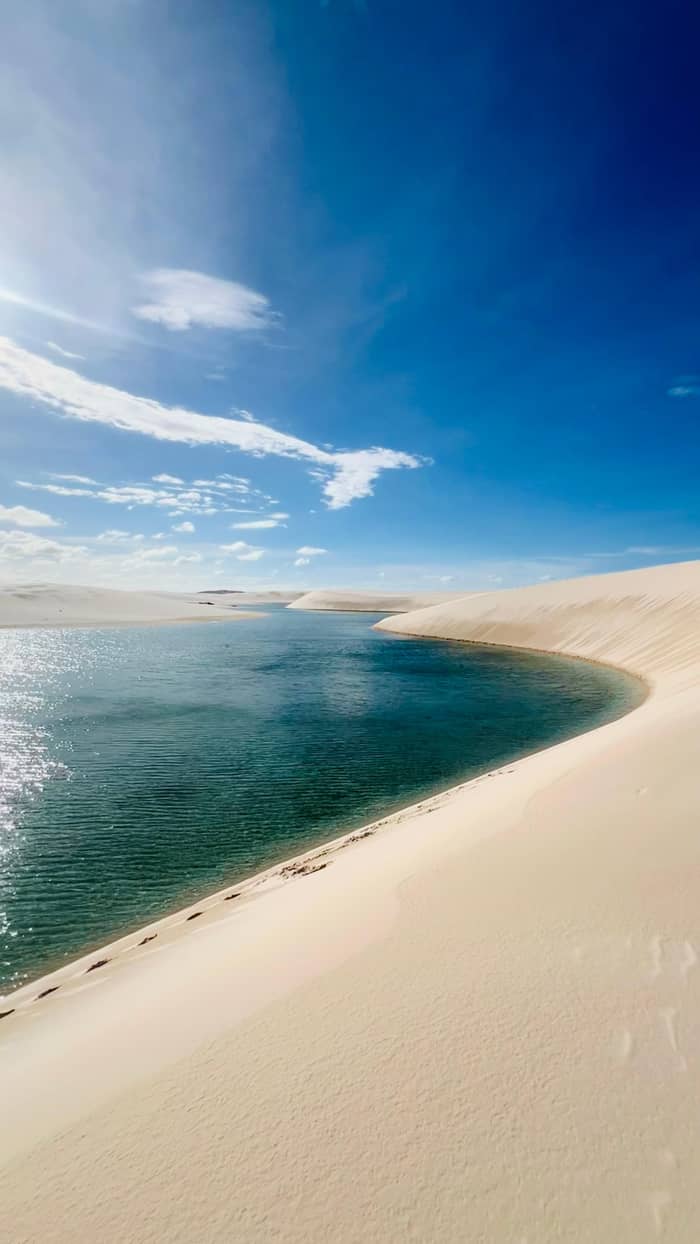
Swimming
Full lagoons
May to August
- WaterAt its peak
- CrowdsJuly busiest
- BookEarly
Guides
Language
Currency
Find open datesfrom $90 · cancel for freeSee your group's price
The quick version
The lagoons are fullest from May to August, with water levels typically peaking around June; July is full but the busiest month, and by December most lagoons have dried.
By month
Compare 4 choices
Select a trip and your group size.
≈
View≈
View≈
View≈
ViewFrom-prices on GetYourGuide, shown at the ECB reference rate. Your exact price is confirmed during booking.
The Lencois Maranhenses lagoons in July are usually full, and the town is busy. Here is what each month brings to the water, the sky and the crowds.
Editorial team, lencoismaranhensestour.quest · Updated November 11, 2026 · ~8 min read
The lagoons are made of rain and nothing else. The EU's Copernicus programme describes them forming when rainwater collects in the hollows between the dunes.5 NASA's Earth Observatory adds that a partly impermeable layer of bedrock and clay under the sand keeps them from draining while the wet season lasts.6 When the rain stops, the clock starts running down, and the sun and wind take the water back a little more each week.
That makes timing the single biggest decision of your trip. The operator of the tour sold on this site notes that the lagoons usually stay well filled for about 4 months, depending on how much rain the year brings. Arrive inside that window and you swim from lagoon to lagoon. Arrive outside it and you walk across a white desert dotted with shallow pools, beautiful in its own way, but not the scene on the posters.
No single date is guaranteed. A wet year fills the basins earlier and keeps them longer; a dry one does the opposite. Treat every month on this page as a pattern rather than a promise, and if the lagoons are the reason for the trip, keep your booking flexible and your expectations open. Its free cancellation window, open until 24 hours before the start, lets you shift the date if the rains run late.
Month by month
| Month | The lagoons | Visits in 2019 | Notes |
|---|---|---|---|
| January | Rains begin, basins start filling | 19,208 | Brazilian summer holidays |
| February | Filling | 5,413 | Quietest month |
| March and April | Filling | 9,640 and 8,115 | Showers, green |
| May | Full, weather settling | 8,837 | Good value |
| June | Typical peak level | 15,878 | Fullest water |
| July | Full | 32,994 | Busiest month |
| August | Starting to fall | 14,537 | Still good |
| September | Falling | 9,518 | Wind arrives |
| October and November | Low | 6,313 and 10,456 | Windy, low water |
| December | Most dry | 10,877 | Permanent lagoons only |
Visits from the gateway towns' 2019 count in ICMBio's public use plan; water from the state tourism office, the tour operator and NASA; every year differs.10,7,1,3,2,11
The state tourism office places the heavy rains between January and July, when countless lagoons of clear fresh water appear in shades of blue and green.7 The tour operator's notes put the rainy season from January to June and the dry season from July to December. ICMBio's management plan describes the same rhythm in its own words: six months of intense rain and the rest of the year completely dry.8
The totals are higher than the desert look suggests. NASA puts the yearly rainfall at about 125 centimetres, which is why it calls the park far from a desert.9 Most of that falls in the first half of the year, so the lagoons in the rainy season grow week by week. In January and February you see the basins starting to fill, and through the following months they deepen and join up.
Travelling in these months has trade-offs. After January you get fewer people, lush green around the dune field and lagoons that are still filling, but also heavy showers and some muddy tracks on the way in. Pack a light rain layer and a dry bag for your phone and camera, and accept that a cloudy afternoon can soften the colours. The upside is space: you share the lagoons with far fewer people than in July.
Crowds
Visits counted by the gateway towns in 2019, as charted in ICMBio's public use plan for the park.10
From May the landscape reaches its high point, with full lagoons and settled weather, according to the park's public use plan.2 NASA chose June for its satellite portrait of the park because that is around when lagoon water levels typically peak.1 The UNESCO description in Brazil's national register puts it simply: the property shows its best landscape when the lagoons reach their maximum volume.13
The Lencois Maranhenses lagoons in July are usually still full, and so is Barreirinhas. The park plan records that visits here peak in July, a school-holiday month, unlike the rest of Brazil where December and January are busiest.2 In the 2019 count from the gateway towns, July drew 32,994 visits, about twice as many as June or August.10 Beds, drivers and boats are all in demand in those weeks, and prices for rooms follow.
If you can only travel in July, it is still a fine time to come. Book the lagoon day and your beds early, start as soon as your tour allows, and expect company at Lagoa Azul and Lagoa Bonita, already the busiest area of the park.14 June and the second half of May offer nearly the same water with less pressure, which makes them the months to aim for if your calendar is free. Weekdays are calmer than weekends in every month.
When should you go?
Start from what matters most to you.
If I want the fullest lagoons
June
Lagoon levels typically peak around June.1
If I want full water and fewer people
Late May or August
Full from May; visits peak in July.2
If I want wind for kitesurfing
September or October
The winds arrive and the season extends.11
If I can only come in December
Santo Amaro or Esperanca
Gaivota never dries; Esperanca holds water up to 12 m deep.4,12
If I want the quietest month
February
Lowest visits in the 2019 count.10
Pick a season
Swimming
May to August
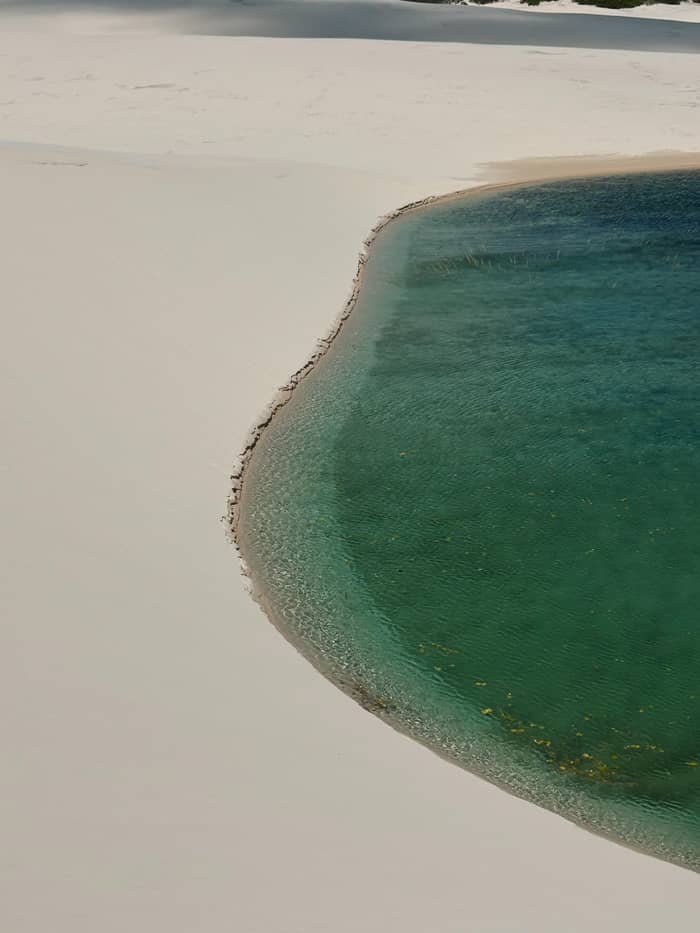
Wind and light
September and October
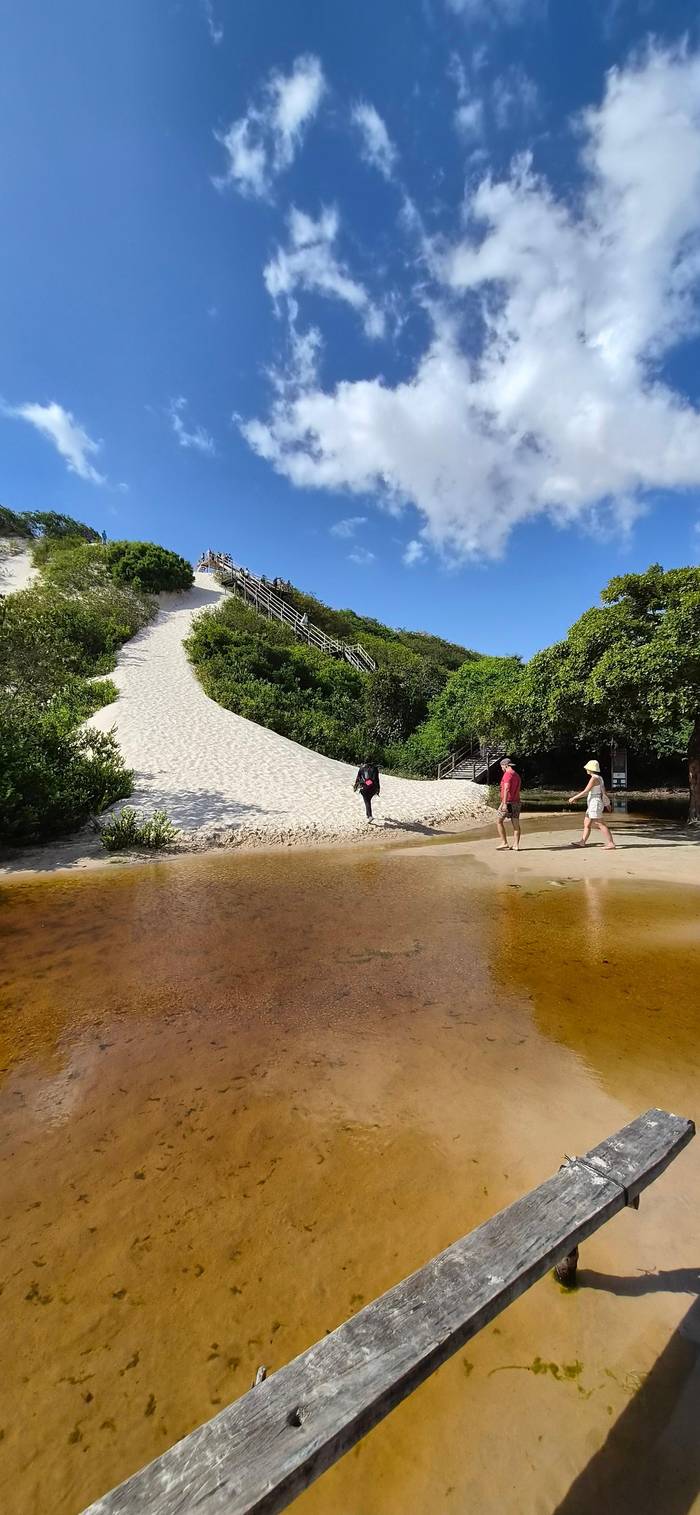
Sand and rivers
November to April
After July the rains have gone, and the water starts its long retreat. NASA describes the rains subsiding between August and November while the water table falls.3 The operator's notes say the same in plainer terms: from July to December the water level drops month by month. August is usually still very good, with most lagoons holding water and fewer crowds than July, which makes it a quiet favourite.
September is the honest gamble. The Lencois Maranhenses lagoons in September are smaller and more scattered, and some of the shallow ones have gone, yet the deeper ones may still hold water for a swim, so ask your operator before you book. The park plan notes that the season stretches into September and October with the arrival of the winds that bring the kitesurfers.11 Atins fills with kites while the lagoon circuits empty out.
That wind changes the feel of the dunes. Sand moves, ripples sharpen and the late light turns warm and long. If you come in these months, choose tours that visit the deeper lagoons, ask your operator which ones still hold water, and consider the Santo Amaro side, where the Lagoa do Junco keeps a good level through the dry months.17 A good guide knows which basins are still worth the walk that week.
The water year
By December most of the lagoons have dried up, NASA notes.3 What remains is the dune field itself, white and enormous, with a few bodies of water that never empty and the river and coast around it. Out west, the Lagoa da Gaivota near Santo Amaro, which the state rates the park's largest, never runs dry.4 Inland, the river-fed Lagoa da Esperanca keeps water all year, as deep as 12 m in places.12
The park plan calls the Esperanca a must for visitors in the dry season.18 It is a good example of how the dry months still work: you trade the chain of swimming lagoons for rivers, permanent lakes, the coast and the dunes themselves. The state tourism office notes that in the dry season the sand often turns golden and pink as it reflects the sunset, a scene best seen from a scenic flight.19
Visit numbers drop too. October 2019 counted 6,313 visits, among the lowest of the year.10 If you come now, set expectations with your operator, choose river and coast days alongside the dunes, and enjoy having the sunset viewpoints almost to yourself. The park is open to visitors in every month, and the dunes alone are reason enough for some travellers to come.20 Just do not promise anyone a swim.
Video
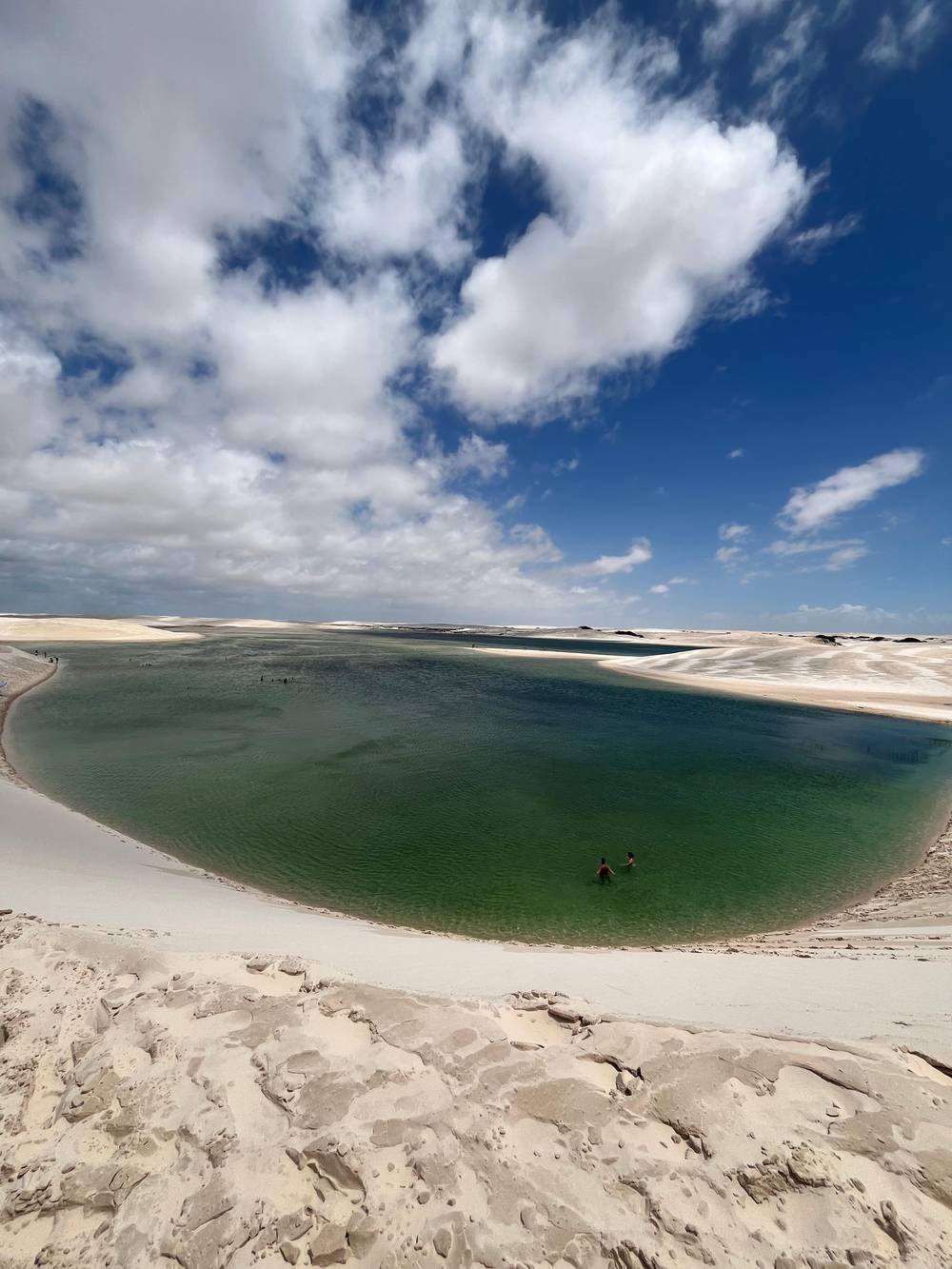
Inside Brazil on YouTube · Your tap on play is what loads the video.
The property reveals its finest landscape when the lagoons reach their maximum volume, creating a rare beauty.
Season checklist
The new year brings the first rains and the first water in the basins. January is busy for a different reason. December and January are the usual peak months across Brazil, the park plan notes, and the 2019 count shows 19,208 visits here that January.2,10 February is the quietest month on the same count, with 5,413.10 Lagoons are still filling then, so the scenery is changing from week to week.
March and April are a quiet, green and sometimes wet compromise. Some lagoons already hold water, others are still shallow, and the midday heat is fierce. That is why the state notes that the trips usually run in the afternoon, when the sun is lower.16 Plan around the showers and you may have the lagoons largely to yourself, which is a rare thing here.
Whatever month you pick, the basics stay the same. The sun is strong all year, there is no shade on the dunes, and the walking between lagoons is on soft sand. The state recommends sunscreen, swimwear, light clothes and drinking water constantly.16 ICMBio adds insect repellent to the list, which matters most in the wetter months.15 A hat with a brim and sunglasses make the glare off the white sand bearable.
If the lagoons are the reason for the trip, aim for late May to August, with June the safest bet for water and July the busiest.1,2 If you want water with fewer people, look at the edges of that window. If you care more about wind, wide horizons and the coast than swimming, September and October have their own appeal, and the kitesurf season is in full swing.11 There is no bad month to see the dunes, only months that suit different trips.
Plan for change rather than fight it. Book a flexible day, give yourself a spare morning in Barreirinhas, and ask your operator for the latest lagoon conditions a few days before you go. A spare day also helps with crowds: you can swap the most popular circuit to a weekday or an early start. Foreign travellers made up only 9% of visitors in the plan's survey, so most of the people around you will be Brazilian visitors.21
Last, remember why the place exists. The national park was created by decree in 1981, and the lagoons you swim in are part of what it protects.22 Motorboats are banned on the lagoons between the dunes, and glass is not allowed anywhere in the park.23,24 Leave them as you found them, take your rubbish back to town, and they will fill again next year for the next visitors.
FAQ
NASA notes that lagoon levels typically peak around June.1
The park plan describes full lagoons from May, and July is the peak month for visits.2
The state says January to July; the tour operator says January to June.7
The 2019 count shows 5,413 visits that month.10
ICMBio keeps the park open in every month of the year.20
Sources
Up next
Which lagoon circuit, which month? Ask a real person.